
















The silence surrounding the construction projects Brava is still waiting for
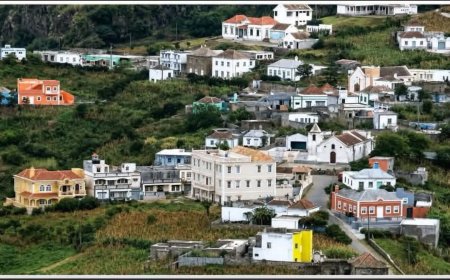
City of Nova Sintra, September 1, 2026 (Bravanews) — Some public works projects may disappear from political discourse, but they do not fade from the public’s memory. On the island of Brava, some of these projects remain a part of daily life and the citizens’ expectations. These were initiatives launched by the previous government that, for various reasons, seem to have been sidelined in the current government’s communications. Among them are the water desalination project on Brava, the alternative road from Fajã d’Água to Palhal, and the renovation of the Nossa Senhora do Monte School. These are projects that transcend partisan disputes and concern the island’s development. For this reason, the silence surrounding them deserves to be questioned. Brava cannot be remembered only when it is time to ask for votes.
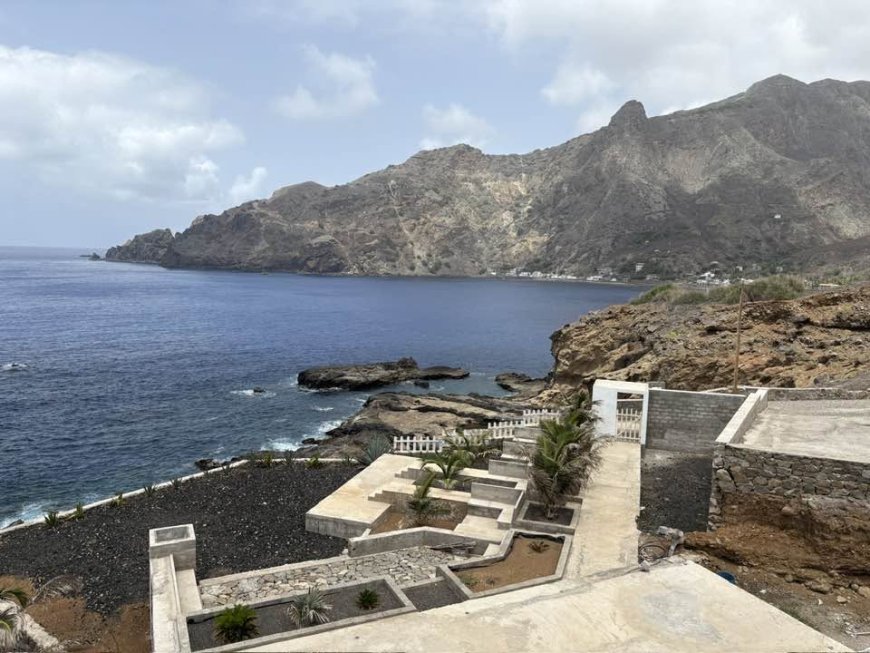
The issue of water desalination is particularly sensitive for an island that is well aware of the limitations of its water resources. Ensuring a sufficient, consistent, and high-quality water supply is neither a luxury nor a secondary concern. It is a basic necessity for families, schools, public services, and economic activity itself. If the desalination project was launched with the aim of addressing this problem, its continuation should remain a priority for the authorities. The fact that the project is no longer a topic of public discussion does not mean the need has disappeared. On the contrary, the population continues to face water-related difficulties. Brava needs concrete solutions, not silence.
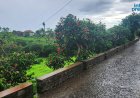
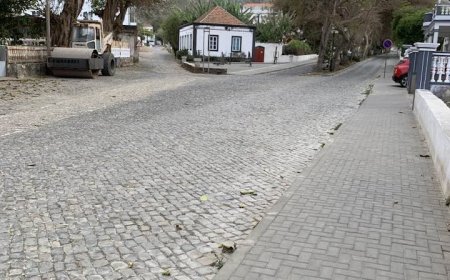
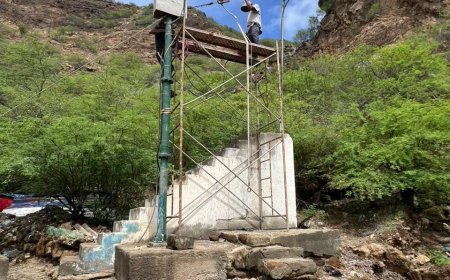
The alternative road between Fajã d’Água and Palhal is also a key issue for the mobility and safety of the local population. Road infrastructure should not be evaluated solely by how often it appears at official ceremonies. It should be evaluated by its usefulness to those who need to travel, transport goods, access services, and deal with emergencies. For an island with Brava’s geographical characteristics, better internal connections can make a significant difference. If the road was conceived as a necessary alternative, its construction should not be held hostage to a change in government. Public works do not belong to political parties. They belong to the people who benefit from them. And that is precisely why Brava has the right to ask about its future.
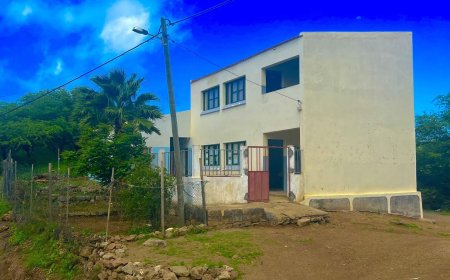
The renovation of the Nossa Senhora do Monte School is another issue that deserves attention. A school is not merely a building where classes are held during specific hours. It is a space for learning, protection, community, and building the future of a community. When the renovation of a school facility is announced, it creates legitimate expectations among students, teachers, staff, and families. Those expectations do not simply disappear because there has been a political change. On the contrary, the more time that passes, the greater the need to clarify what has been done, what remains to be done, and when the project can be resumed or completed. Education must transcend partisan differences. Brava deserves to know the fate of its school.
It is understandable that every government wants to showcase its own achievements and highlight the projects it considers a priority. This is part of the political dynamic and the need to be accountable to citizens. The problem arises when projects from a previous administration are no longer mentioned simply because they were not conceived by the current government. An island’s development neither begins nor ends with a single term in office. There are projects that span legislative sessions and require continuity to produce results. Interrupting or concealing a project for political reasons ultimately harms citizens. The public should not have to pay the price for changes in government. And it certainly should not be forced to choose between projects that have already begun and new ones.
On Brava, what matters is not who laid the first stone, who signed the contract, or who appeared in the inauguration photo. What matters is whether the project will be completed and put to use by the population. That should be the logic behind any responsible public policy. When infrastructure is deemed necessary, governments must seek to ensure its completion, regardless of who made the initial political decision. An administration’s merit is not diminished by completing a project started by another. On the contrary, it demonstrates institutional maturity and respect for public funds. A true development policy is measured by its results. And results mean completed and functioning projects.
That is why the silence surrounding these three projects is difficult to understand. This is not about demanding that the current government promote projects conceived by the previous government. It is simply a matter of requesting public information about their status. What happened to the desalination project? What is the status of the alternative road from Fajã d’Água to Palhal? What is the status of the renovation of the Nossa Senhora do Monte School? Are there funds allocated to continue the project? Have new deadlines been set? Are there technical, administrative, or financial obstacles? These are legitimate questions that deserve clear answers. In a democracy, the silence of those in power cannot replace accountability.
The people of Brava have enough experience to know that a political promise is not the same thing as a completed project. Over the years, many communities have learned to be wary of announcements that do not translate into concrete results. This is precisely why authorities must communicate transparently, especially when projects considered important are at stake. If a project is delayed, an explanation must be provided. If it has been suspended, this must be stated. If it has been redesigned, the reasons must be explained. And if it is still planned, the public must be informed of the timeline for its implementation. What cannot be allowed to prevail is constant uncertainty. Brava deserves information, respect, and predictability.
Desalination, the road, and the school have different characteristics, but there is one thing that unites them: they all address concrete needs of the island. Water, transportation, and education are fundamental pillars for any community that seeks to develop in a balanced way. These are not issues that can be treated as mere pieces of election propaganda. When an island faces structural limitations, every public investment must be monitored with care and responsibility. The government has a duty to explain which projects it intends to continue, which it intends to replace, and which it considers unfeasible. What matters is that these decisions be justified and transparent. The public should not have to discover the fate of these projects through silence or their absence.
There is also a matter of respect for public investment. When the government begins a project, it uses funds that belong to taxpayers. If, after it has begun, that project is abandoned or left on hold indefinitely, the problem is not merely political. It is also financial and institutional. Every stalled project may represent funds already spent without the expected benefit having reached the public. Therefore, the decision to continue, modify, or cancel a project must be based on technical and economic criteria. It would be unacceptable to leave important infrastructure in limbo simply because it was associated with a previous administration. Public funds are not tied to any political party.
Brava should not be put in a position where it has to ask for favors either. The island’s residents are taxpayers and have the same rights as residents of the country’s other islands. Access to water, good transportation routes, and adequate school facilities should not depend on a community’s ability to exert political pressure. It must result from a national public policy that recognizes the specific characteristics of each territory. A small island cannot be overlooked simply because it has a smaller population. On the contrary, its geographical limitations make certain investments even more important. The balanced development of the country requires that no island be treated as peripheral. Brava is also part of the national project.
It is equally important that Brava’s elected representatives, regardless of their party affiliation, monitor these issues. Members of Parliament, mayors, and other political leaders must demand information and defend the interests of the population. Democratic oversight should not be confused with constant confrontation. It is perfectly possible to demand explanations from the government while also acknowledging the projects currently underway. The goal must be to ensure results for the island. When a major project is stalled, questions must be asked. When there is a delay, an explanation must be demanded. And when a solution is found, it must be supported. Politics must serve the people, not the other way around.
The current government therefore has an opportunity to demonstrate that the continuity of public policies takes precedence over partisan politics. Resuming a project from the previous administration does not mean acknowledging a political defeat. It means recognizing that there are projects that are good for the country and that should continue. Similarly, completing an infrastructure project started by another administration does not detract from the merit of the government that inaugurates it. On the contrary, it demonstrates the ability to build on what is useful and necessary. Governing also means knowing how to build on what has been done well in the past. And, above all, it means taking responsibility for correcting what needs to be corrected without abandoning what remains important.
The people of Brava are not necessarily interested in knowing who will win the dispute over the credit for these projects. What matters is when they will have better-quality water, when they can count on an alternative road connection between Fajã d’Água and Palhal, and when students will be able to benefit from a properly renovated school. These are simple but fundamental questions. Ordinary citizens want results they can see and use. They want to know that public money is being put to good use. They want to feel that their needs are being heard by political leaders. And above all, they want to ensure that promises are not forgotten after the elections. This is a legitimate demand in a democratic society.
For all these reasons, the silence surrounding these projects must end. There is no need to turn every project into a dispute between governments, parties, or individuals. What is necessary, however, is to place information at the center of the public debate. The water desalination project on Brava, the alternative road from Fajã d’Água to Palhal, and the renovation of the Nossa Senhora do Monte School continue to be part of the population’s expectations. If the conditions exist to move forward, then let’s move forward. If there are difficulties, let them be explained. If new projects or changes are needed, let them be presented. What Brava cannot accept is being forgotten. The island awaits the continuation and completion of these projects, and has every right to ask when it will finally see them come to fruition.